9.30 am- 5.30 pm
08256 266624


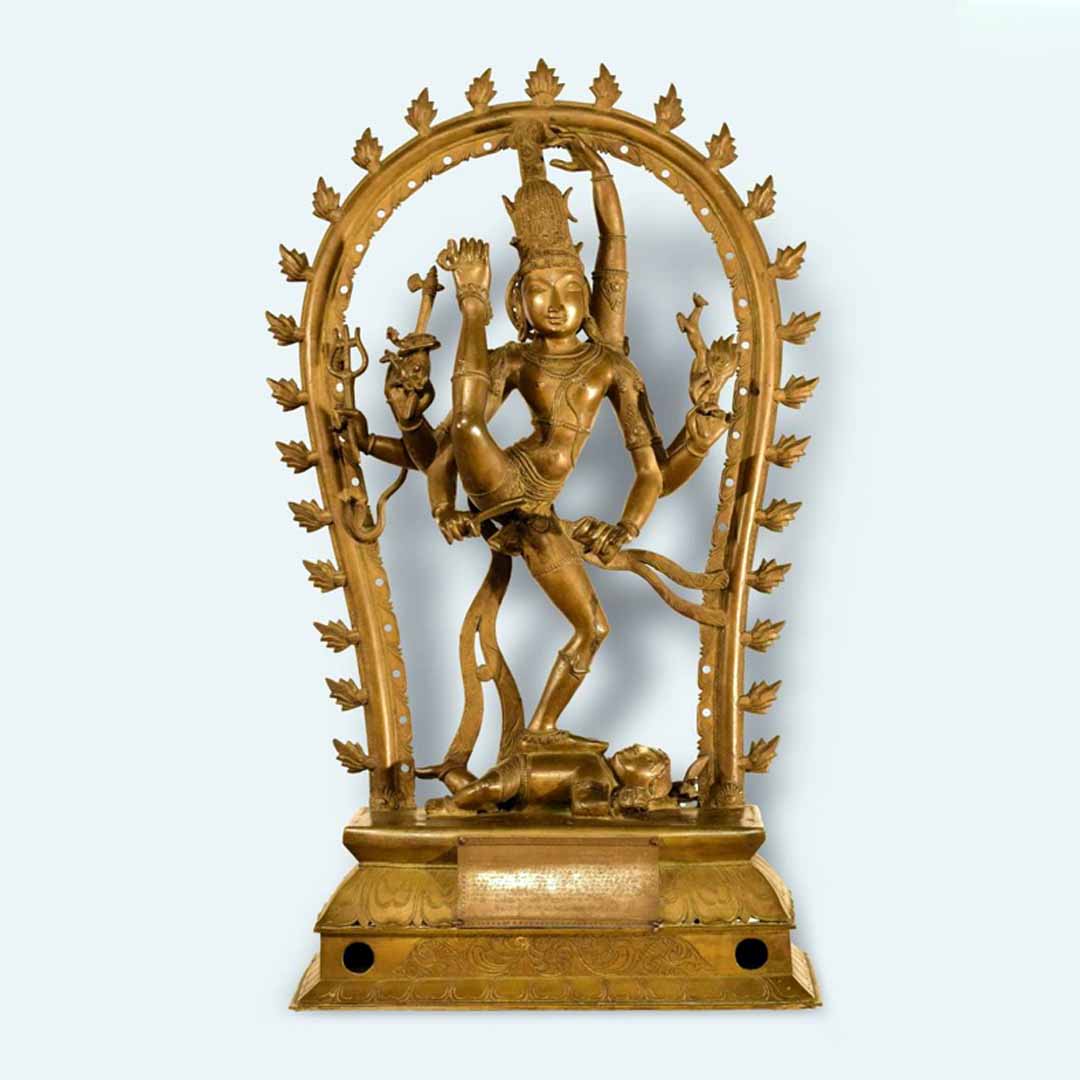
This Mahashivratri, let’s explore a lesser-known legend surrounding Shiva. A striking bronze sculpture captures the moment when Shiva removes one of his earrings with his foot; one leg is fully extended while the other rests on the Apasmara purusha. Surrounding him is a radiant halo, with flames dancing around, symbolizing his cosmic performance, stability, and dominance.
In this depiction, Shiva possesses six fierce arms, each holding significant symbols: the Trishul, Parshu, Damru, Danda, Mriga (a deer representing fire), and a kathasta mudra that showcases the divine Tandava nritya. Adorned with intricate details, he wears a Jatamukuta, Kanthamala (necklace), Kundal (earring), Yajna pavita (sacred thread draped from neck to waist), Sarpabandha (a snake around the waist), Keyur (armlets), Valay (bangles), and Nupur (anklets), complemented by an Adhovastra. This artefact exemplifies the exquisite craftsmanship of the Chola dynasty.
The story unfolds with a competition between Shiva and Parvati at Chidambaram to determine divine superiority. As Parvati mirrored Shiva’s every move, she halted when he assumed this particular pose. Choosing her modesty over the contest, she ultimately yielded, granting Shiva the victory. This moment not only highlighted his dominance but also illustrated his supremacy over the cosmos.
This pose signifies Shiva’s triumph over ego, embodying the cyclical nature of destruction and creation, symbolizing balance in the universe.