9.30 am- 5.30 pm
08256 266624


On the upcoming occasion of Mahavir Jayanti, let’s delve deeper into Jain philosophy. There are a total of 24 Tirthankaras, but this image highlights the five major Tirthankaras that are primarily worshipped, known as Panch Parmeshti. Jain philosophy emphasizes liberation and outlines the path to attain it. This journey involves five significant life events: Conception, Birth, Renunciation, Omniscience, and Nirvana. These five events are collectively referred to as Pancha Kalyanak.
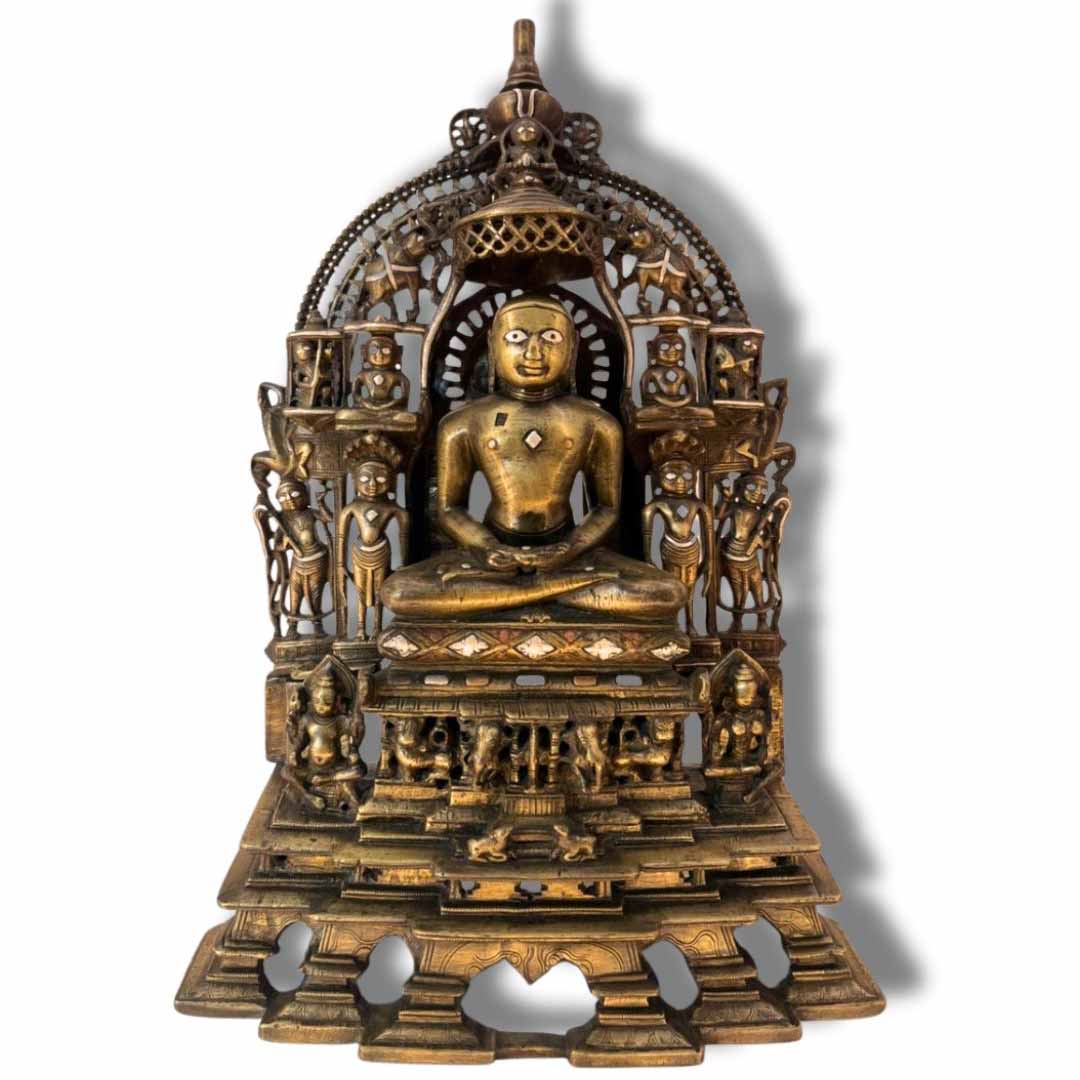
The 18th-century idol features the five Jinas, three of whom are depicted in Padmasana (sitting posture) and two in Kayotsarga (standing posture). This arrangement typically represents Rishabhnath, Mallinath, Neminath, Parshvanath, and Mahavira. Notably, there are two representations of Parshvanath in this idol, indicated by their snake hoods, which are a symbol associated with him. The primary sitting Jina is Mahavira.
In addition to the five Jinas, the idol includes animals like a lion, elephant, and cow. Accompanying them are the Siddhayika Yakshi and Matanga Yaksha, along with attendants holding chauris (flying whisks). The Tirthankaras bear the gem called Shrivatsa, an important symbol of the Jinas, which represents purity.
Jain philosophy emphasizes asceticism, guiding individuals toward the path of Nirvana by leaving behind all karmic bondage and ultimately attaining the state of Siddha.